









Why and how to treat them?
Dental stains

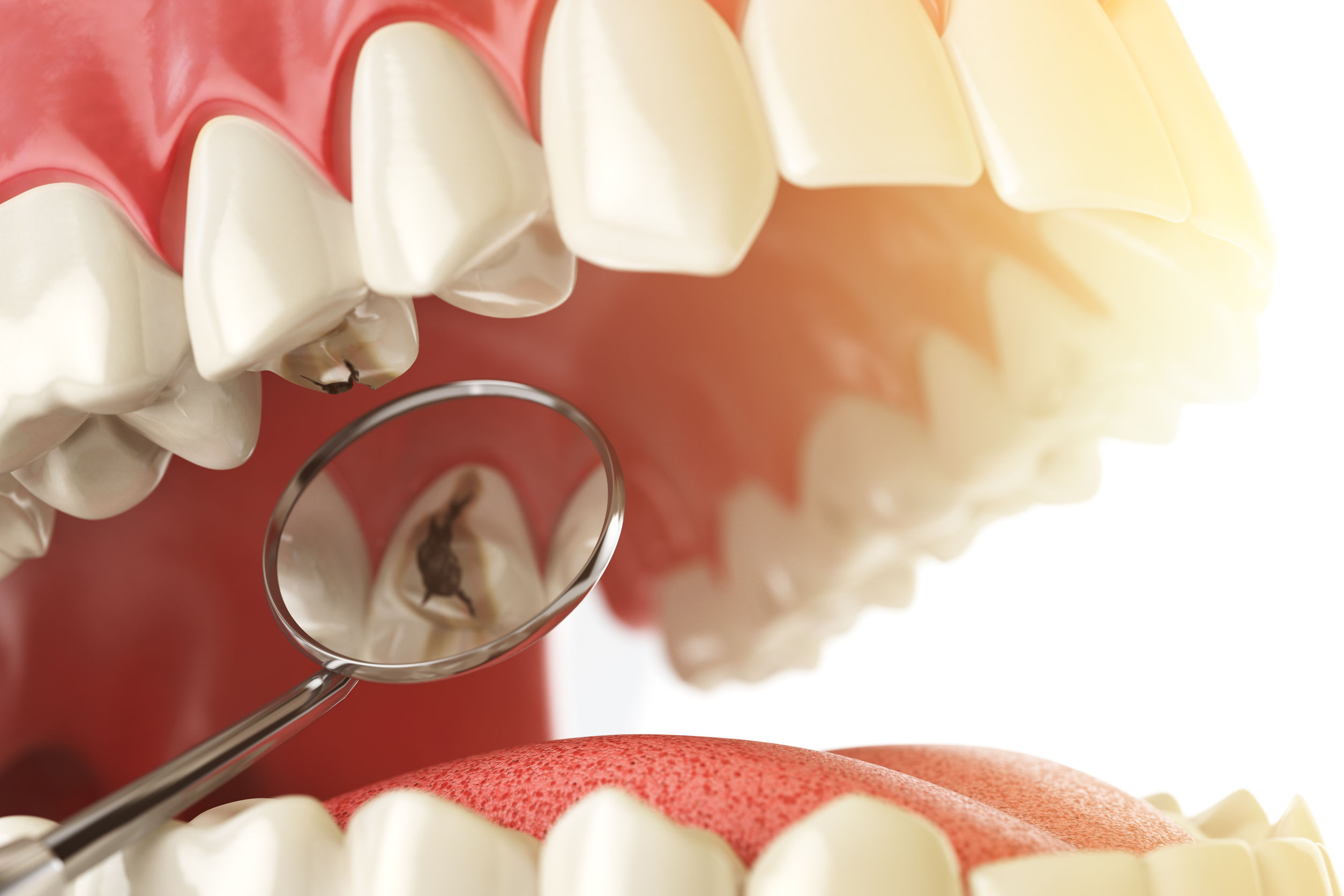
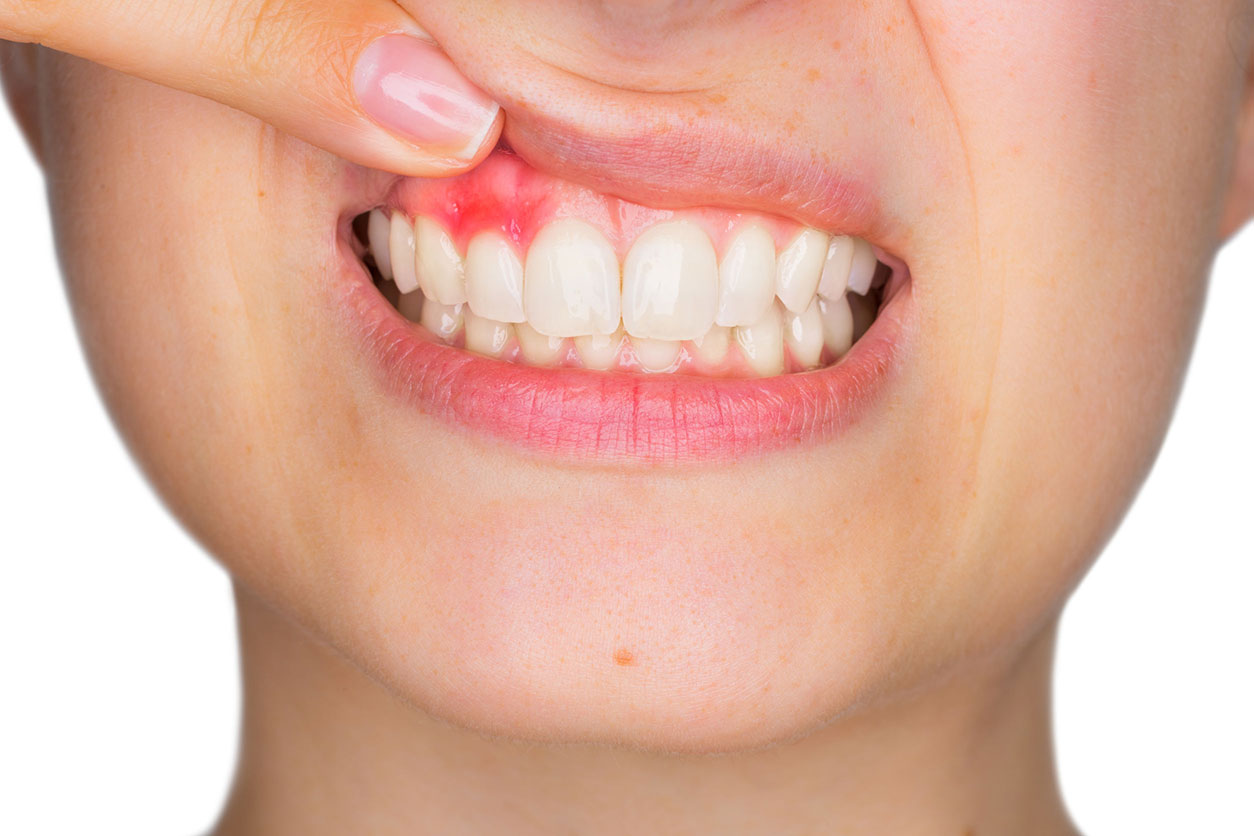
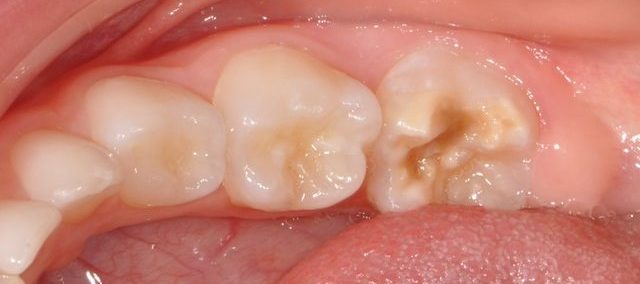
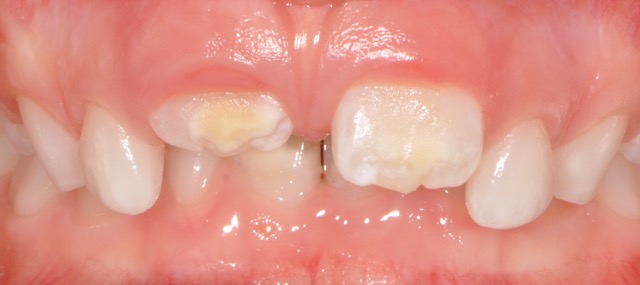
Increasingly common in our children, white spots turning yellow or brown on permanent teeth, especially the incisors and first molars, are a concern.
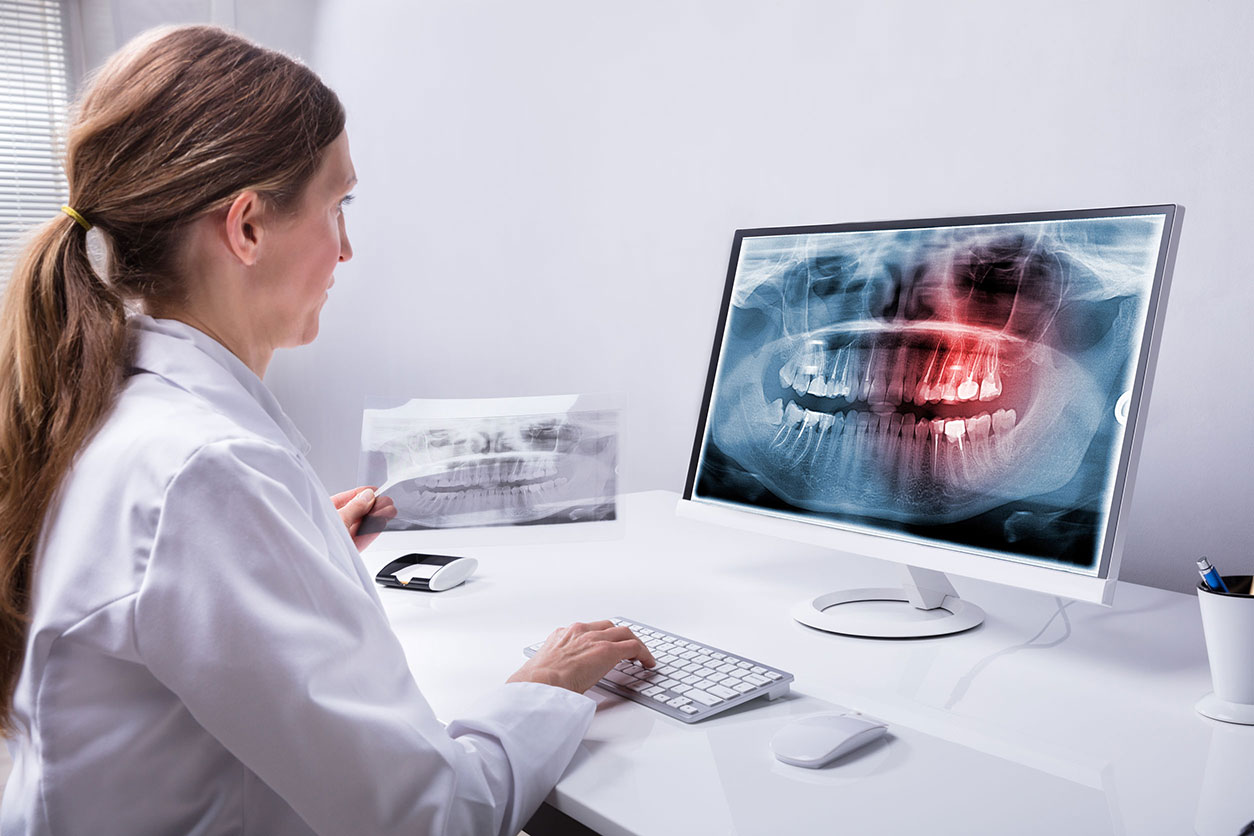
Parents are often alerted by the unsightly appearance of these stains, but this is not the only point to be considered: it is useful to investigate the issue further.
Why are these stains there and how should they be treated?
Cette malformation dentaire, qui doit être diagnostiquée rapidement et différenciée d’autres problèmes dentaires, est en fait une hypo-minéralisation de l’émail survenue pendant la phase de formation de la dent avant que celle-ci ne pousse en bouche. Elle touche particulièrement les premières molaires permanentes et les incisives et est ainsi appelée MIH : elle peut aussi toucher les molaires de laits ce qui peut prévenir une future malformation des dents permanentes.
La sévérité de cette malformation pouvant aller de simples taches jusqu’à couvrir toute la dent, ce n’est pas l’aspect esthétique qui est le plus préoccupant. En effet, ces dents touchées présentent une sensibilité accrue au froid, au chaud, au sucré et à l’acide. L’émail ayant ce défaut, la carie l’attaque plus facilement. Le collage de matériaux est plus difficile et l’anesthésie conventionnelle prend moins bien si on veut la soigner.
What are the incriminating causes?
Several factors are pointed out: premature birth or low birth weight, recurrent infections at a young age including otitis and bronchitis, pollution, vitamin deficiency especially calcium and vitamin D, taking antibiotics...
What can be done? Specialized dental care for children
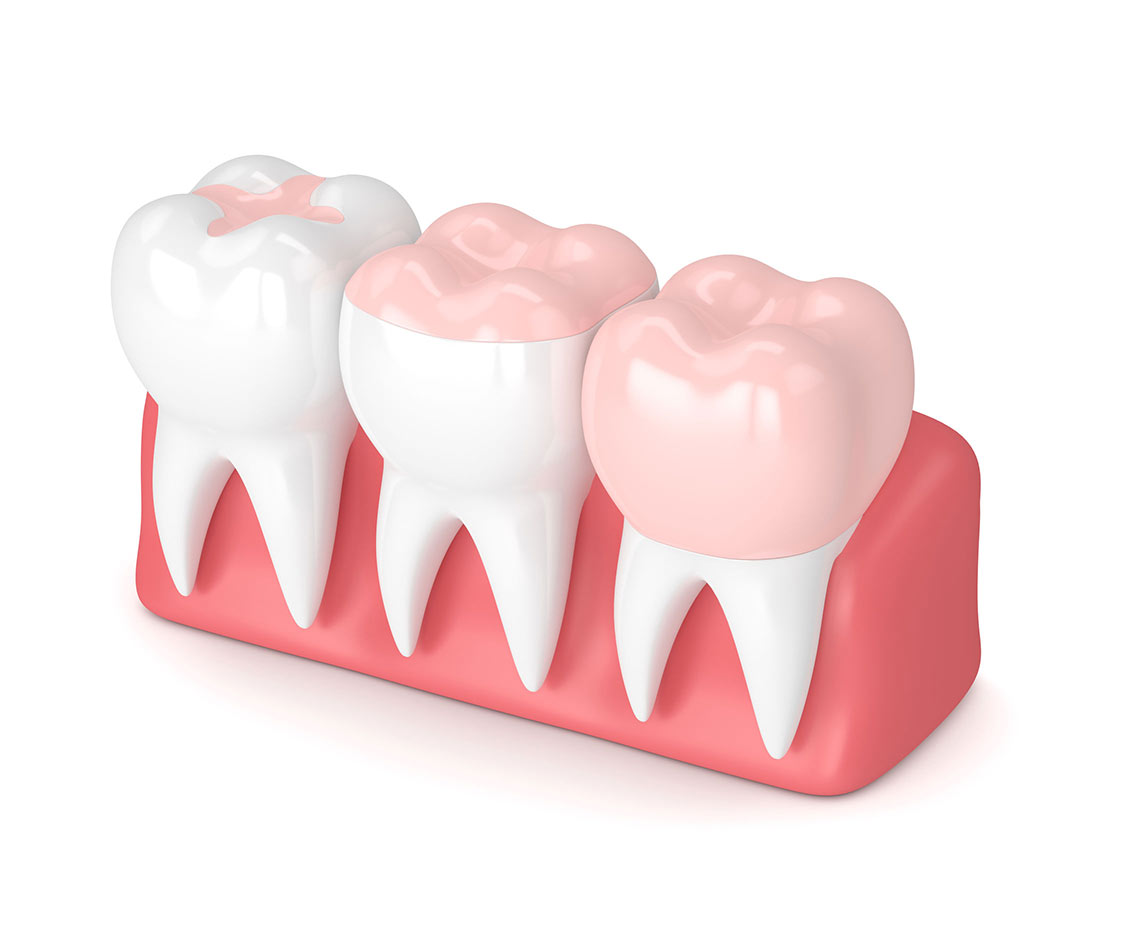
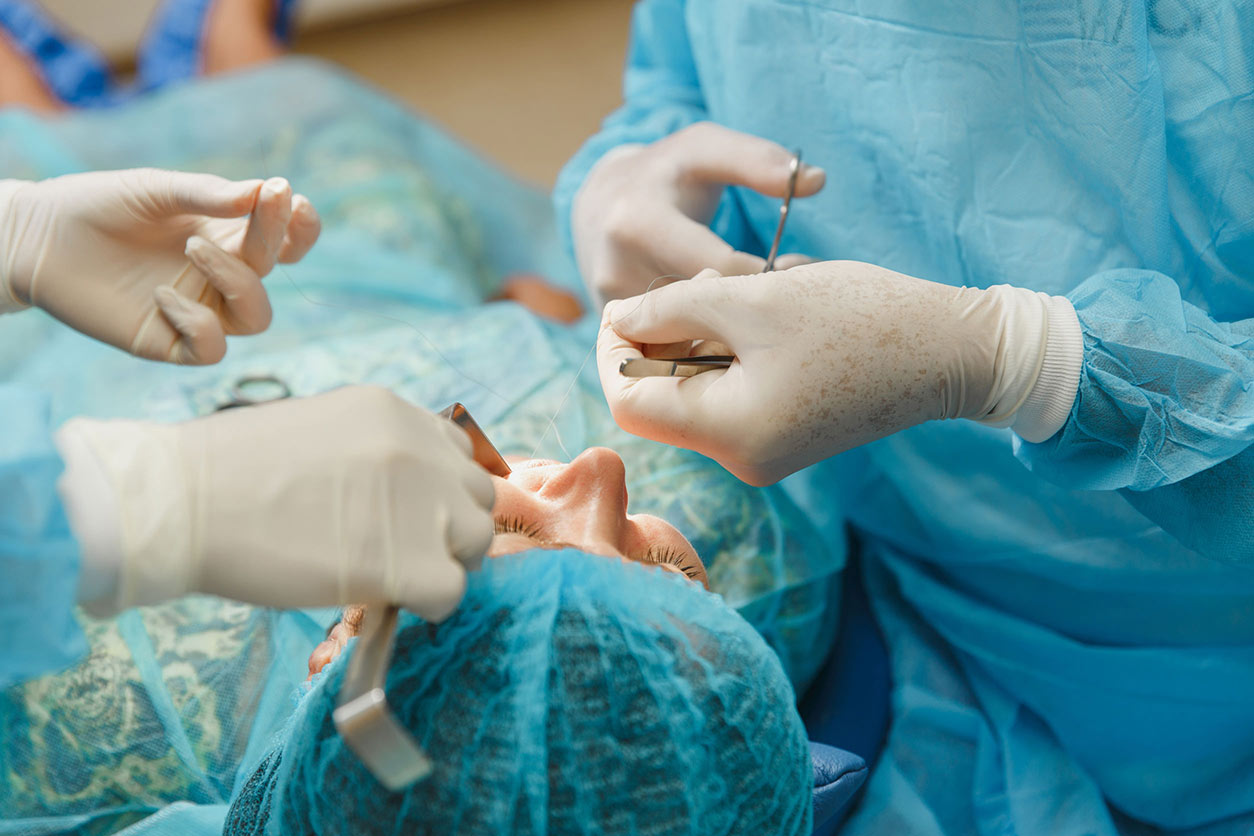
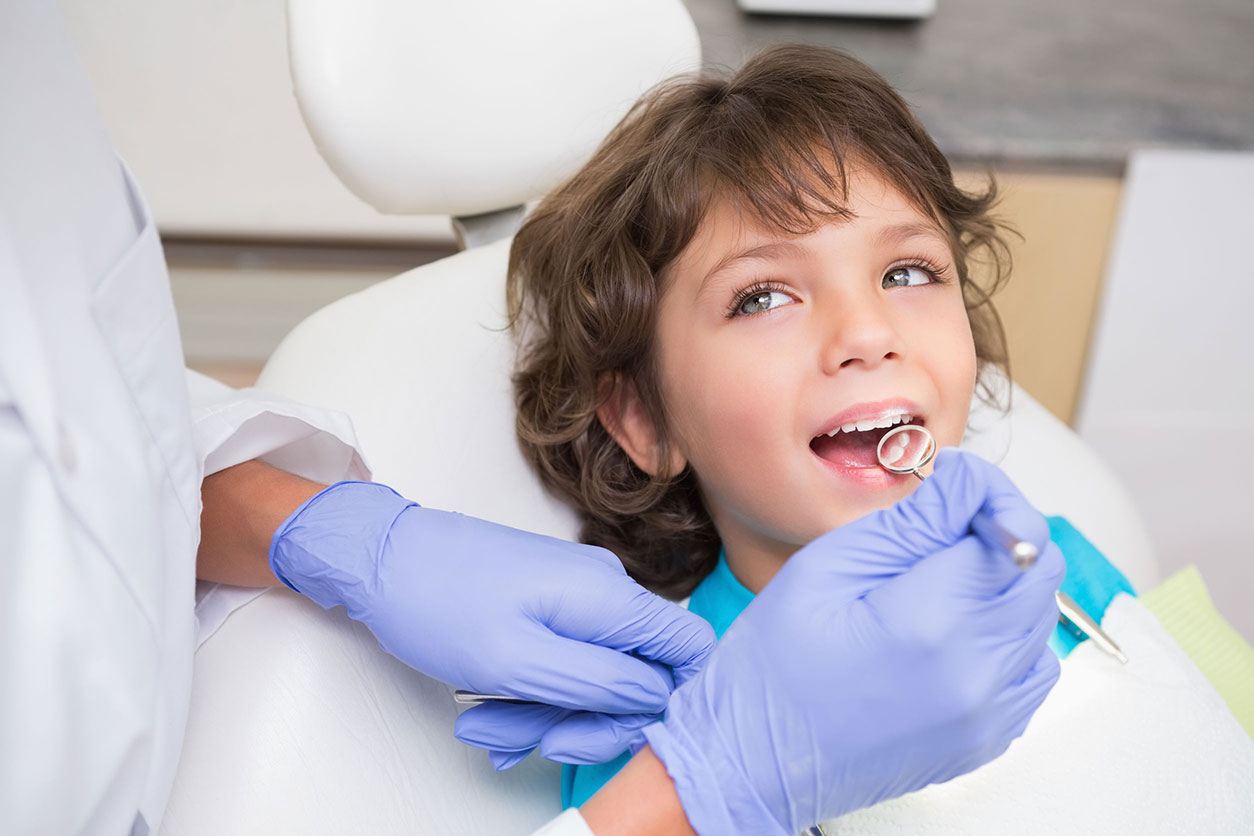
To protect these fragile teeth, it is essential to have impeccable dental hygiene. It is strongly recommended to limit snacking as much as possible and to avoid sweet and sour foods to reduce irritation. Fluoride varnishes and gels are offered by the dentist to strengthen the teeth and reduce their sensitivity. Depending on the size and severity of the lesions, temporary or permanent fillings may be considered. Regular follow-up with the dentist and new anesthesia techniques prevent aggravation and help find the right solutions for your child.
CALL US!
+41 22 870 94 94
Chêne-Bourg Dental Center
Excellence at the service of your smile