


























The eruption of wisdom teeth often marks an important milestone during adolescence or early adulthood. Many people have a legitimate question about these so-called “third molars”: Is it really necessary to have them removed in every case? In reality, there are various situations where this procedure is necessary, while in other cases, it’s better to opt for monitoring. Find out everything you need to know about wisdom tooth surgery, the main indications, and alternatives to keep your teeth healthy.
What are wisdom teeth, and when do they come in?
Wisdom teeth, also known as third molars, are the last teeth to erupt in the jaw. They typically emerge between the ages of 17 and 25, although some people may see their wisdom teeth erupt as early as the late teens. The dental arch then accommodates up to four new molars located at the back of the mouth.
In some people, wisdom teeth may remain impacted or never break through the gum due to a lack of space in the dental arch. This situation is not uncommon: the size of the jaw has decreased over the course of evolution, while the number of teeth has not decreased accordingly. As a result, many adults have at least one wisdom tooth that has not fully erupted.
When is it recommended to have wisdom teeth removed?
The decision on whether or not to remove wisdom teeth is not based solely on their presence. Several factors must be evaluated by the oral and maxillofacial surgeon or dentist before considering wisdom tooth extraction.
Wisdom tooth extraction becomes the preferred solution when these teeth cause localized complications or threaten the integrity of the rest of the dentition.
Here are a few situations in which wisdom tooth surgery is often recommended:
- Crowding of the other teeth due to a lack of space in the dental arch
- Infection (pericoronitis) or inflammation of the gum surrounding a partially impacted molar
- Cysts, untreatable cavities, or loosening of the adjacent tooth
- Cavities that cannot be properly treated due to their hard-to-reach location
- Recurring pain, difficulty chewing, or persistent discomfort
In some cases, the recommendation for extraction is based on a high risk of future complications, even in the absence of immediate visible symptoms. For example, when a wisdom tooth is completely impacted and appears to be abnormally oriented on an X-ray, it could cause long-term problems, such as pushing against an adjacent root or causing a cyst to form.
However, preventive extraction is not automatic. In many patients, the tooth remains asymptomatic, is fully integrated into the dental arch, and does not necessarily need to be removed if no problems are identified. The dentist will then assess the risk-benefit ratio before recommending wisdom tooth surgery.
What are the risks associated with wisdom teeth?
The unpredictable nature of wisdom tooth eruption can lead to several types of short- or long-term complications. Some of these situations will prompt the patient to seek care from a dental professional sooner.
When there is not enough space in the dental arch, a wisdom tooth may grow at an angle, erupt only partially, or become trapped beneath the gum. This can lead to:
- Intense localized pain
- Persistent gum inflammation
- An increased risk of cavities on the adjacent tooth, which is difficult to clean
- The development of cysts, small abscesses, or recurrent infections
- Displacement or Overlapping of Other Teeth
All of these complications make daily life more difficult and compromise overall oral health, particularly among young adults. A consultation can then help determine whether prompt intervention by a maxillofacial surgeon is advisable.
In rare cases, more serious problems may arise, such as resorption of the root of the second molar, the development of bone lesions around the root of the third molar, or significant swelling of the cheek and neck due to an advanced infection.
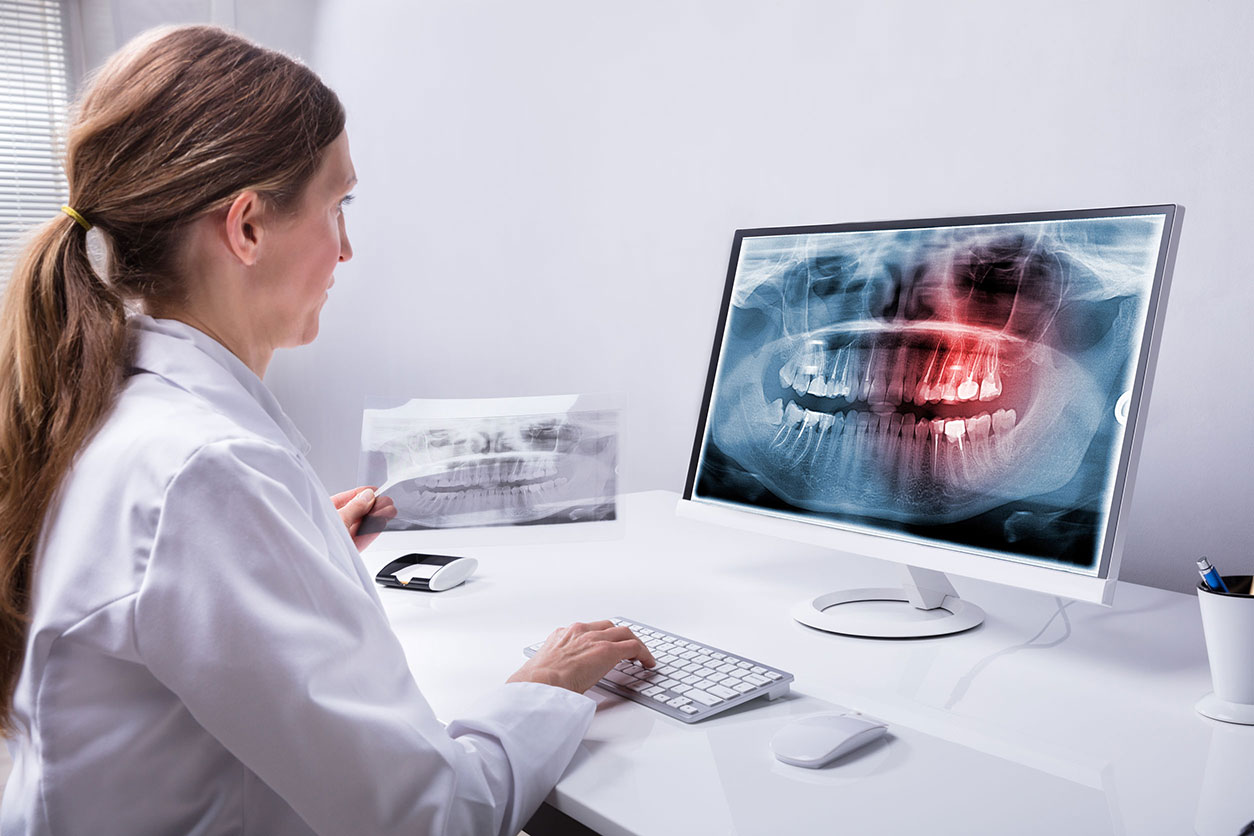
These conditions remain rare, but they explain why regular monitoring in young adults is recommended to detect any abnormalities as early as possible. A simple clinical examination, supplemented by a panoramic X-ray, is generally sufficient to identify teeth that require close monitoring.
What is the wisdom tooth surgery like?
Wisdom tooth extractionis a common surgical procedure, typically performed by an oral and maxillofacial surgeon. Depending on the complexity of the case and the number of teeth involved, the procedure is performed under local or general anesthesia.
The standard procedure for wisdom tooth surgery involves several key steps:
- Anesthesia of the surgical site (local or general, as indicated)
- A delicate incision in the gum
- Removal of the tooth, sometimes in pieces if it is difficult to access
- Gum sutures to promote healing
- Postoperative monitoring with a prescription for pain relievers and/or antibiotics
The entire procedure generally takes less than an hour for two to four teeth extracted at the same time. Some patients prefer to have all their wisdom teeth removed in a single visit to shorten the recovery period.
After wisdom tooth extraction, it is normal to experience moderate pain, swelling, or temporary difficulty opening your mouth. These symptoms will gradually subside if you follow the instructions provided by the medical team.
However, certain complications may occur, such as a secondary infection, persistent bleeding, or alveolitis (painful inflammation caused by the premature dissolution of the blood clot). The close proximity between the root of the lower third molar and the dental nerve can sometimes lead to temporary sensory disturbances.
Is wisdom tooth extraction always performed?
Nowadays, the recommendation to extract wisdom teeth is no longer as routine as it used to be. Dentists take into account the overall condition of the mouth, symptoms, and any associated conditions. Monitoring is now the preferred approach if the third molar appears stable and well-positioned.
Only clear associations between wisdom tooth eruption and complications—whether immediate or potential—justify surgical intervention. In cases where there is no discomfort or objective symptom, wisdom tooth extraction “as a matter of routine” will not be recommended. This confirms the modern trend toward tailoring medical treatment to the individual following an accurate diagnosis.
- No symptoms at all: annual checkup recommended
- Uncertainty regarding the trajectory or potential impact: additional imaging and expert opinion
- Signs of infection, chronic pain, or tooth movement: extraction recommended
Regular communication between the patient, dentist, and oral and maxillofacial surgeon facilitates ongoing care over time. This approach maximizes the chances of maintaining a harmonious dental arch while minimizing unnecessary invasive procedures.
Frequently asked questions about wisdom tooth extraction
When does the growth or eruption of wisdom teeth become a problem?
Problems mainly arise when there is not enough space in the dental arch, which can lead to misalignment, pain, repeated infections, or the shifting of other teeth. Regular checkups help detect these signs early.
- Swelling of the gums
- Pain at the back of the mouth
- Persistent bad breath
- Inflammation or redness
How long does recovery take after wisdom tooth surgery?
Most patients make a full recovery within eight to ten days after the procedure. Returning to a normal diet and optimal oral hygiene depends on the individual’s rate of healing as well as adherence to medical advice.
- Resumption of school or work activities, usually within a week
- Avoid hard or very hot foods for three to five days
| Period | Related Tips |
| 48 h | Rest, ice on the cheek, pain relievers |
| Up to 7 days | A balanced diet, good hygiene, and avoiding tobacco |
Why doesn't everyone have four wisdom teeth?
It is common for one to four wisdom teeth to be naturally absent due to human evolution and genetic variations. Sometimes, the tooth buds simply do not develop, or remain embedded in the bone without ever breaking through.
- Teeth are present but embedded in the bone
- Absent germ cells at birth
- Variability Across Populations
Which specialists should you consult for wisdom tooth surgery?
The initial consultation takes place with a general dentist, who can make a diagnosis, order an X-ray, and determine whether an extraction is necessary. If the situation appears complex, referral to a maxillofacial surgeon ensures appropriate care.
- General dentist for the initial evaluation
- Maxillofacial surgeon for difficult or impacted tooth extractions
| Location | Recommended Specialist |
| Simple Extraction | Dentist |
| Impacted teeth, near a nerve | Oral and Maxillofacial Surgeon |